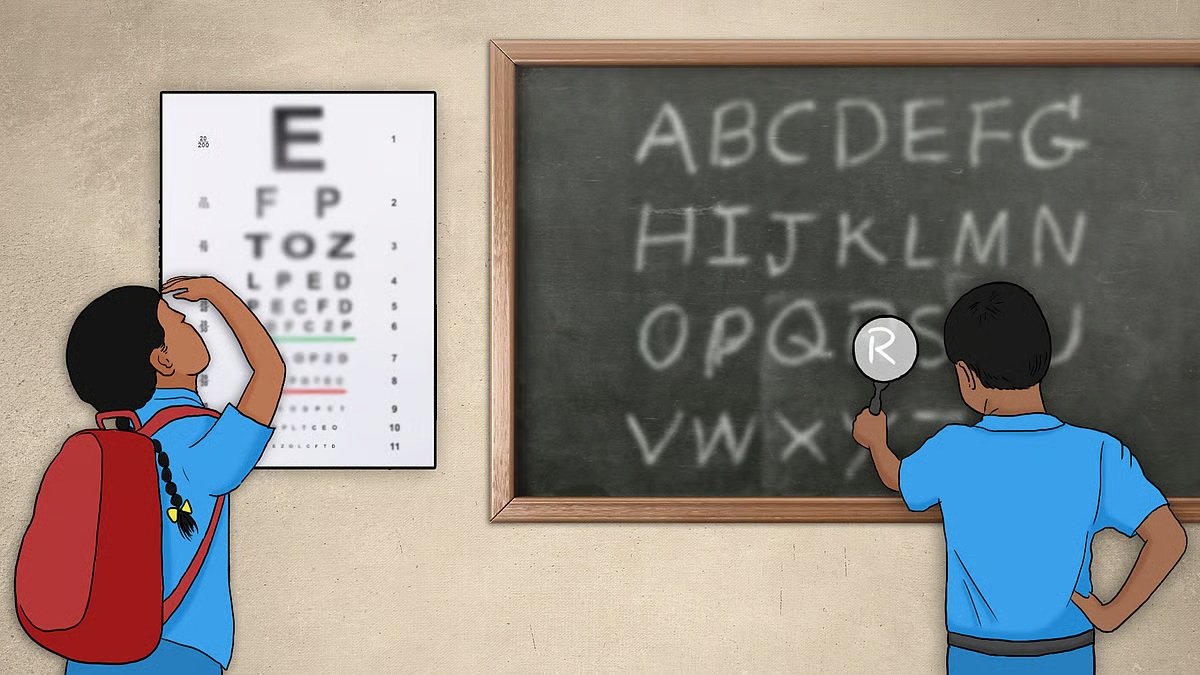
Myopia, also known as short-sightedness, is becoming increasingly common among children in Karimnagar. With rising screen time, reduced outdoor activities, and increased academic pressure, many children are developing blurred distance vision at a young age.
Parents often notice that their child sits very close to the television, squints while reading the blackboard, or complains of headaches. These are early warning signs of myopia.
At Dr Rakesh Superspeciality Eye Hospital, Karimnagar, we provide comprehensive pediatric eye examinations and advanced myopia control strategies to prevent progression and protect long-term vision.
Early detection is extremely important.
What Is Myopia?
Myopia is a refractive error where distant objects appear blurred while near objects are seen clearly.
It occurs when:
- The eyeball grows longer than normal
OR - The cornea is too curved
As a result, light focuses in front of the retina instead of directly on it.
Why Is Myopia Increasing in Children?
Modern lifestyle plays a major role:
1️⃣ Excess Screen Time
Mobile phones, tablets, and online classes increase near work.
2️⃣ Reduced Outdoor Play
Natural sunlight exposure helps regulate eye growth.
3️⃣ Genetic Factors
If one or both parents have myopia, the child is at higher risk.
4️⃣ Continuous Near Work
Reading, writing, and gadget use for long hours strain developing eyes.
Symptoms of Myopia in Children
Parents in Karimnagar should watch for:
- Sitting close to TV
- Squinting to see distant objects
- Frequent eye rubbing
- Headaches after school
- Reduced academic performance
- Complaints of blurred distance vision
Regular screening helps detect myopia early.
Why Is Myopia Control Important?
Untreated progressive myopia can lead to:
Controlling progression reduces future complications.
Diagnosis at Our Eye Hospital
At Dr Rakesh Superspeciality Eye Hospital, Karimnagar, pediatric evaluation includes:
- Detailed refraction test
- Cycloplegic refraction
- Axial length assessment (if needed)
- Fundus examination
- Family history evaluation
Accurate diagnosis ensures proper correction and control planning.
Treatment Options for Myopia in Children
✔ Spectacles
The safest and most common correction method.
✔ Myopia Control Lenses
Special lenses designed to slow progression.
✔ Atropine Eye Drops (Low Dose)
Used under supervision to reduce myopia progression.
✔ Increased Outdoor Activity
At least 1–2 hours daily exposure to natural light.
✔ Screen Time Regulation
Follow 20-20-20 rule.
Early intervention significantly slows progression.
Prevention Tips for Parents
- Encourage outdoor sports
- Limit screen time
- Maintain proper reading distance
- Ensure good lighting
- Schedule annual eye check-ups
Prevention and early control are key.
When Should You Consult an Eye Doctor?
Consult immediately if:
- Child complains of blurred distance vision
- School teacher reports vision problems
- Headaches are frequent
- There is family history of high myopia
Regular pediatric eye exams are recommended once every year.
Conclusion
Myopia in children is increasing rapidly due to modern lifestyle changes. Early detection and myopia control strategies can prevent high myopia and long-term complications.
At Dr Rakesh Superspeciality Eye Hospital, Karimnagar, we provide comprehensive pediatric eye care and customized myopia management plans.
Protect your child’s vision today with timely eye screening.
Myopia commonly begins between 6 and 14 years of age.
Myopia cannot be cured, but its progression can be slowed with proper management.
Excessive screen time and near work are associated with increased risk of myopia progression.
In selected cases, contact lenses may be used under supervision, but spectacles remain safest.
Children should undergo eye examination once a year or sooner if symptoms develop.
Book Your Appointment at Dr. Rakesh Eye Hospital in Karimnagar
Don’t compromise on your vision. Choose Dr. Rakesh Superspeciality Eye Hospital, trusted by thousands of patients across Telangana. Schedule your consultation today.